
Choosing the best TIG welder for beginners can feel overwhelming. Should you buy AC or DC? Do you really need AC/DC for aluminum, or will a DC machine work for steel projects? Is 120V enough for a home garage, or do you need 240V? And most importantly — how much should you spend without wasting money on features you don’t need?
Many beginners either buy too cheap and regret it, or overspend on a machine they don’t fully understand. The right TIG welder depends on the materials you plan to weld, your power supply, and your long-term goals. If you want to learn about TIG welding for beginners Read More
In this guide, you’ll discover exactly which TIG welder is right for your garage, skill level, and budget.
Table of Contents
What Is the Best TIG Welder for Beginners?
The best TIG welder for beginners is a 180–200 amp AC/DC inverter machine with dual voltage (120V/240V) and foot pedal control. This type of welder allows you to work on steel, stainless steel, and aluminum while maintaining precise heat control. Dual voltage makes it garage-friendly and powerful enough for future projects, so you won’t need to upgrade as your skills improve.
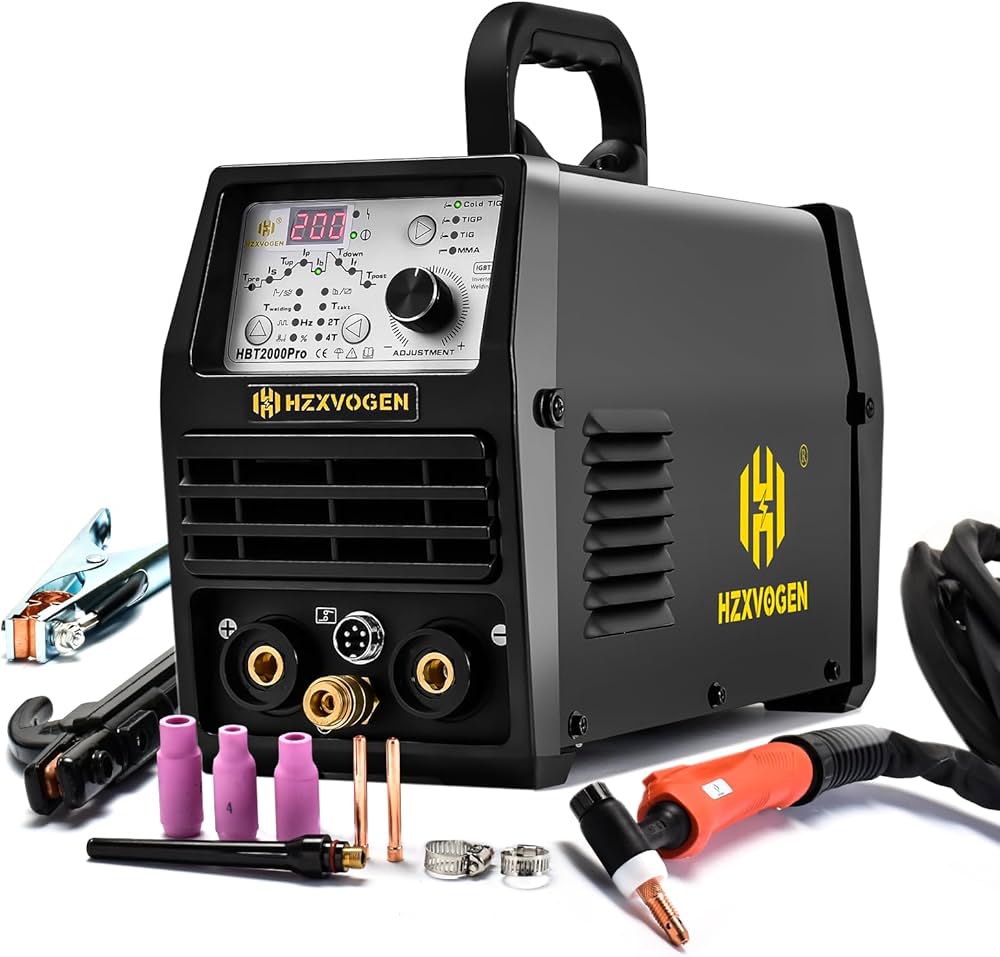
A beginner-friendly best TIG welder should include:
- 180–200 amp output capacity
- AC/DC capability (for aluminum and steel)
- Dual voltage input (120V/240V)
- Foot pedal amperage control
- Inverter technology for stable arc control
- This combination ensures versatility, control, and long-term value for home use
Why 180–200 Amps Is Ideal for Beginners
For most home welders, a 180–200 amp TIG welder offers the perfect balance of power, versatility, and future-proofing.
Here’s why:
- Welds thin sheet metal without burn-through
- Handles thicker steel up to about 1/4 inch
- Provides enough power for small fabrication projects
- Allows room to grow as your skills improve
What Happens If You Buy Less Than 180 Amps?
Many 140–160 amp machines struggle with:
- Thicker mild steel
- Aluminum projects
- Longer welds due to limited duty cycle
This often leads to frustration and upgrading sooner than expected.
Simple Rule to Remember
If you want one machine that covers:
- Mild steel
- Stainless steel
- Aluminum
Choose 180–200 amps AC/DC and you won’t outgrow it quickly.
Why AC/DC Matters for Aluminum
TIG welding machines come in two types:
- DC only
- AC/DC
DC (Direct Current)
- Used for steel and stainless steel
- Smooth, stable arc
- Easier for beginners learning basic technique
AC (Alternating Current)
- Required for welding aluminum
- Breaks up aluminum oxide layer
- Provides cleaning action + penetration
Aluminum naturally forms a tough oxide layer.
DC cannot properly break this layer — which is why AC is necessary for clean aluminum welds.
The #1 Beginner Mistake
Many beginners buy a cheaper DC-only machine to save money.
Later they want to weld aluminum — and realize they can’t.
That upgrade usually costs more than buying AC/DC from the start.
If you plan to weld aluminum even once, choose AC/DC.
Do You Need Pulse TIG as a Beginner?
Many TIG welders advertise “Pulse TIG” as a premium feature. Beginners often assume it’s necessary — but in reality, it depends on what you’re welding.
Let’s break it down simply.
What Does Pulse TIG Actually Do?
Pulse TIG automatically switches the welding amperage between:
• A high peak current (for penetration)
• A lower background current (for cooling)
This creates a rhythmic heat cycle that:
• Reduces overall heat input
• Controls puddle size
• Helps prevent burn-through
• Improves weld appearance
Think of it as automatic heat control assistance.
Top 5 Best TIG Welders for Beginners (Quick Comparison Table)
| Model | Amps | AC/DC | Voltage | Best For | Approx. Price (USD) |
|---|---|---|---|---|---|
| Everlast PowerTIG 200DV | 200 | Yes | 120V / 240V | Best Overall Beginner AC/DC | $1,300–$1,500 |
| AHP AlphaTIG 200X | 200 | Yes | 110V / 220V | Best Value for All Metals | $900–$1,100 |
| LOTOS TIG200ACDC | 200 | Yes | 110V / 220V | Best Budget AC/DC | $800–$1,000 |
| Forney 322 190 TIG | 190 | No | 120V | Best 120V TIG Starter | $700–$850 |
| Lincoln Electric Square Wave 200 | 200 | Yes | 115V / 230V | Best Premium Entry TIG | $1,800–$2,200 |
1.Everlast PowerTIG 200DV — Best Overall for Beginners
Why It’s Great:
- True AC/DC for welding steel, stainless, and aluminum
- Dual voltage (120V/240V) for garage or shop setups
- Foot pedal included for precise heat control
- Pulse TIG mode for advanced bead control
- Reliable duty cycle for longer projects
Best For: Beginners who want a single machine that grows with their skills.
Quick Verdict: One of the best all-around first TIG welders—future-proof and versatile.
2. AHP AlphaTIG 200X — Best Value for All Metals
Why It’s Great:
- AC/DC welding for aluminum and steel
- Dual voltage (110V/220V) for home or garage use
- Smooth arc performance across low and high amperage
- Strong customer support and warranty
Best For: Beginners looking for versatility without breaking the bank.
Quick Verdict: Excellent value AC/DC TIG for beginners who want flexibility.
3.LOTOS TIG200ACDC — Best Budget AC/DC TIG Welder
Why It’s Great:
- Rare AC/DC capability at an affordable price
- Dual voltage for garage or small shop setups
- Easy to learn for beginners
- Stable arc with good penetration
Best For: Beginners on a budget who still want to weld aluminum and stainless steel.
Quick Verdict: Best budget choice for serious beginners who want a capable AC/DC machine.
4.Forney 322 190 TIG — Best 120V TIG Starter
Why It’s Great:
- Simple, beginner-friendly interface
- Runs on standard 120V household power
- Lightweight and portable
- Ideal for steel and stainless steel projects
Limitations:
- No AC → Cannot weld aluminum
- Shorter duty cycle than AC/DC models
Quick Verdict: Solid starter TIG for beginners who don’t plan to weld aluminum yet.
Why It’s Great:
- Legendary build quality and arc stability
- Trusted brand warranty and USA support
- Foot pedal included for precise heat control
- Designed for long-term use and durability
Best For: Beginners who want a premium TIG welder that lasts a lifetime.
Quick Verdict: Ideal long-term investment if your budget allows.
How to Use This Table
- Want a “do it all” machine? → Everlast or AHP
- Planning to weld aluminum? → Choose AC/DC models (Everlast, AHP, LOTOS, Lincoln)
- Limited to 120V household power? → Forney 322 190
- Prioritize long-term quality and reliability? → Lincoln Square Wave 200
Why These 5 Welders Stand Out
We selected these models based on:
✅ AC/DC capability for aluminum welding
✅ Dual voltage flexibility (120V/240V) for home garages
✅ Foot pedal inclusion for beginner heat control
✅ Price vs performance value for USA buyers
✅ Brand support and warranty reliability
✅ Positive customer satisfaction trends
Beginner Buying Tips
- Foot Pedal: Makes learning TIG welding much easier
- Dual Voltage: Prepares you for aluminum projects in the future
- Duty Cycle: Longer duty cycle is better for extended practice
- AC Balance Features: Cleaner aluminum welds and fewer defects
- Budget Planning: Compare $300, $800, $1,500 tiers based on skill and goals
120V vs 240V — What Works in a Home Garage?
One of the biggest beginner mistakes when buying the Best TIG welder is ignoring garage power limitations. Before choosing a machine, you must understand what your home electrical system can actually handle.
Most U.S. garages have either:
- 120V outlets on 15A or 20A breakers
- Or a dedicated 240V outlet (like a dryer outlet)
The difference matters more than beginners realize.
What Happens on a 15A Breaker?
Most standard household outlets run on a 15-amp breaker at 120V.
Here’s the reality:
- A 15A breaker can only deliver about 1,800 watts safely
- Many TIG welders draw close to that limit at higher settings
- If you increase amperage too high, the breaker will trip
What This Means for Beginners
On a 120V 15A circuit:
- You are limited to thinner materials
- You may struggle welding above 1/8 inch steel
- Aluminum performance will be very limited
- Long welds may cause overheating or shutdown
If your garage only has 15A outlets, you are working with restricted power.
Breaker Tripping — Why It HappensWhen a TIG welder draws more amperage than your breaker allows:
- The breaker trips
- Arc becomes unstable
- You can’t reach full heat
- Aluminum becomes frustrating
- Common causes:
- Using a long or thin extension cord
- Running other tools on the same circuit
- Pushing the welder near maximum output
- Beginners often blame the welder — but it’s usually a power supply limitation.
Safety Section
Always follow proper electrical and welding safety standards as recommended by OSHA.
https://www.osha.gov/welding-cutting-brazing
Can a 120V TIG Welder Weld 1/4″ Steel?
Technically? Sometimes.
Realistically? Not comfortably.
A 120V TIG welder:
- Can weld thin sheet metal easily
- Handles 1/8 inch steel well
- May struggle on 3/16 inch
- Is not ideal for 1/4 inch steel
To weld 1/4″ mild steel properly, you typically need:
- Around 180–200 amps
- Stable arc output
- Higher input power (usually 240V)
On 120V, the machine often cannot sustain that output long enough due to limited input power and duty cycle.
For serious fabrication or thicker material, 240V is strongly recommended.
When Does a Beginner NEED 240V?
You should consider 240V power if:
- You want to weld aluminum consistently
- You plan to weld 3/16″ or thicker steel
- You want better duty cycle performance
- You want stable arc at higher amperage
- You want room to grow without upgrading later
A 240V setup provides:
- More consistent arc stability
- Better aluminum performance
- Higher maximum amperage
- Less breaker tripping
- Longer weld times
If you’re buying a 180–200 amp AC/DC TIG welder, you will get significantly better performance using 240V.
20A vs 15A Circuits
If you have a 20A 120V outlet, performance improves slightly.
However:
- It still won’t match 240V output
- Aluminum will remain limited
- Thicker steel will still push the machine
Many serious hobbyists eventually install a dedicated 240V line in their garage. The upgrade often costs less than replacing an underpowered welder later.
Extension Cord Limitations (Very Important)
Using the wrong extension cord is another common beginner mistake.
If you run a TIG welder on 120V:
- Use 10-12 gauge wire for longer runs
- Keep cords under 25 feet when possible
- Never use thin household cords
For 240V welders:
- Use properly rated 240V extension cables
- Keep cable length minimal
- Always match amperage rating
Undersized cords cause:
- Voltage drop
- Overheating
- Arc instability
- Breaker trips
Many “weak machine” complaints are actually poor power delivery.
Best TIG welder for beginners: 120V vs 240V
| Feature | 120V | 240V |
|---|---|---|
| Thin Sheet Metal | Excellent | Excellent |
| 1/8″ Steel | Good | Excellent |
| 1/4″ Steel | Limited | Comfortable |
| Aluminum | Limited | Strong Performance |
| Duty Cycle | Lower | Higher |
| Breaker Trips | More Common | Rare |
| Future Proof | Limited | Yes |
Realistic Thickness Chart
| Voltage | Max Practical Steel Thickness | Max Practical Aluminum Thickness | Best For |
|---|---|---|---|
| 120V | 1/8″ (single pass) | 1/16″–1/8″ | Light hobby work |
| 240V | 1/4″ (single pass possible) | 3/16″–1/4″ | Serious garage fabrication |
Want to learn about what metals you can TIG weld Read More
Simple Decision Rule
- If you only weld thin steel → 120V is best TIG welder for you.
- If you want aluminum or thicker material → Get dual voltage and install 240V.
- If you want long-term value → Choose a 180–200A AC/DC machine and plan for 240V access.
Bottom Line for Beginners
If you only plan to weld thin steel in a small garage with no 240V outlet, a 120V TIG welder can work.
But if you:
- Want aluminum capability
- Want to weld thicker material
- Want stable arc performance
- Want to avoid upgrading later
Choose a dual-voltage AC/DC TIG welder and run it on 240V whenever possible.
It gives you power, flexibility, and long-term value.
Common Beginner Buying Mistakes (And How to Avoid Them)
Beginners often make avoidable mistakes when choosing their first TIG welder — and those mistakes can lead to frustration, wasted money, and early upgrades. Here’s what to watch out for:
1. Buying a DC-Only Welder and Regretting It
Mistake: Choosing a cheaper DC-only machine to save money.
Problem:
DC machines are great for mild steel and stainless, but they cannot weld aluminum properly. Once beginners try aluminum, they end up upgrading sooner — often spending more in the long run.
Solution:
If you plan to weld aluminum even occasionally, choose an AC/DC TIG welder from the start.
2. Ignoring Voltage Requirements
Mistake: Buying a dual voltage machine but running it only on 120V without understanding limitations.
Problem:
120V power is fine for thin steel, but it struggles with thicker steel and aluminum, leading to breaker trips, weak arcs, and poor results.
Solution:
Understand garage power first (120V vs 240V). If you want versatile performance, prepare for 240V use.
3. Choosing Amperage Too Low
Mistake: Buying a lower-amp machine (e.g., 140–160A) thinking it’s “good enough.”
Problem:
Lower amps limit your ability to weld thicker materials, and the machine may overheat quickly — especially with longer welds.
Solution:
Aim for 180–200 amps for a balance of power and versatility.
4. Overlooking the Duty Cycle
Mistake: Not checking the duty cycle spec before buying.
Problem:
Duty cycle determines how long your machine can weld before resting. A low duty cycle means frequent pauses, slower learning, and more frustration.
Solution:
Look for higher duty cycles at your typical welding amperage (especially if you plan on aluminum or thicker steel).
5. Buying Without a Foot Pedal
Mistake: Opting for a basic start-only TIG welder without foot pedal control.
Problem:
TIG welding requires heat control. Without a foot pedal, beginners struggle to adjust amperage “on the fly,” reducing weld quality.
Solution:
Choose a machine that includes a foot pedal or add one if possible.
6. Believing All TIG Welders Are the Same
Mistake: Assuming brand names or similar wattage means similar performance.
TIG Welder Budget Tier Breakdown ($300 vs $800 vs $1500)
Beginners often ask:
“How much should I really spend on my first TIG welder?”
To make this easy, here’s a practical breakdown of what you get at different price points — and what’s worth your money:
$300–$500 Tier — Basic Starter (Steel Only)
What You Get:
- Mostly DC-only machines
- Lower duty cycle
- Limited heat control features
- Often used entry budget models
Good For:
- Thin mild steel
- Metal art / hobby
- Occasional practice
Limitations:
- Does NOT weld aluminum effectively
- Limited power for thicker steel
- Short duty cycles
- Less stable arc
Bottom Line:
Great for absolute beginners experimenting with TIG on thin steel — but not future-proof.
$800–$1,100 Tier — Sweet Spot for Most Beginners
What You Get:
- AC/DC capability in many models
- Dual voltage flexibility (110V/220V)
- Better duty cycle
- More stable arc control
- Foot pedal support included
Good For:
- Mild steel
- Stainless steel
- Light to mid-range aluminum
- Garage welding
Bottom Line:
This is the best value range for most beginners. You get versatility, performance, and future growth without overspending.
$1,200–$1,500+ Tier — Long-Term Investment
What You Get:
- Premium inverter technology
- Better duty cycle at higher amps
- Advanced AC balance modes (great for aluminum)
- Digital controls / cleaner arc
- Better build quality & warranty
Good For:
- Frequent aluminum work
- Thicker steel (up to 1/4″)
- Detailed fabrication
- Small shop use
Bottom Line:
If TIG welding is more than a hobby — or you want a machine that lasts years — this tier offers performance, comfort, and fewer limitations.
Mistake: Assuming brand names or similar wattage means similar performance.
Problem:
Two machines with the same amperage can behave very differently depending on build quality, inverter tech, gas control, and arc stability.
Solution:
Read real user reviews, compare specs, and choose reputable models with stable arcs and good support.
How to Avoid Outgrowing Your First TIG Welder
One of the biggest beginner frustrations is upgrading too soon.
Many people buy:
• A cheap DC-only machine
• Low amperage model
• 120V-only welder
Six months later they want:
• Aluminum capability
• More power
• Better duty cycle
And they end up buying a second machine.
The Smart Beginner Strategy
If possible:
✔ Choose 180–200 amps
✔ Choose AC/DC
✔ Choose dual voltage
✔ Plan for 240V access
It costs more upfront — but saves money long term.
Think of it as buying once instead of buying twice.
Final Verdict — What Is the Best TIG Welder for Beginners?
Choosing the best TIG welder for beginners comes down to three things:
• The materials you plan to weld
• Your garage power supply
• Your long-term goals
If you only plan to weld thin mild steel and want a simple starter machine, a 120V DC welder may work.
But if you want real versatility — including aluminum capability — a 180–200 amp AC/DC dual-voltage inverter TIG welder is the smartest long-term investment.
It gives you:
✔ Steel and stainless capability
✔ Aluminum welding power
✔ Foot pedal heat control
✔ Future-proof flexibility
✔ Better resale value
For most serious hobbyists and garage welders, the best TIG welder for beginners is one that won’t limit your growth after six months.
Buy once. Learn properly. Grow into the machine.
Quick Decision Guide for choosing Best TIG welder for beginner
If you want simple and affordable → Choose DC only
If you want aluminum capability → Choose AC/DC
If you want garage flexibility → Choose dual voltage
If you want long-term value → Choose 180–200 amps
The best TIG welder for beginners is not the cheapest machine — it’s the one that matches your goals without forcing an early upgrade.
Ready to Choose Your Best TIG welder ?
Scroll back to the comparison table and pick the model that matches your:
• Budget
• Power setup
• Material needs
Then start practicing — because skill matters more than brand.