
If you want to learn the most precise and professional welding process, this TIG welding guide for beginners will give you a clear, step-by-step understanding from basics to practical control.
Table of Contents
TIG welding (Tungsten Inert Gas), technically known as Gas Tungsten Arc Welding (GTAW), is one of the highest-quality welding processes used in modern fabrication and manufacturing industries. As an instructor, I always recommend TIG to students who want clean, strong, and visually perfect welds, especially when working with thin materials like stainless steel, aluminum, and specialty alloys.
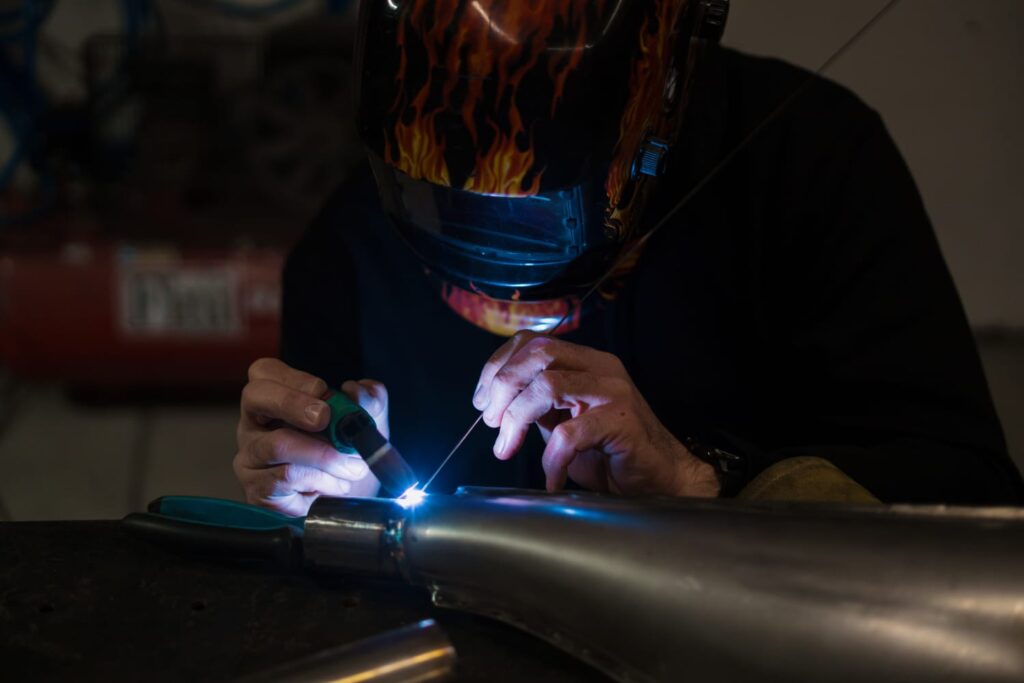
Unlike other welding methods, TIG welding uses a non-consumable tungsten electrode to produce a stable and highly controlled arc. This arc generates intense heat that melts the base metal edges to form a weld pool. When additional strength or material buildup is required, filler metal is added manually—giving the welder complete control over penetration, strength, and final weld appearance.
What makes TIG welding unique is the level of control it provides. You are not just welding—you are precisely managing every aspect of the process:
- Heat input and arc stability
- Weld pool formation
- Filler metal addition
- Final bead appearance
This level of control is why TIG welding is widely used in industries where precision and quality cannot be compromised.
To protect the weld, an inert shielding gas—usually argon—is used. This prevents contamination from oxygen and other atmospheric gases, resulting in clean, bright, and porosity-free welds that meet high industrial standards.
How TIG Welding Works
TIG welding creates an electric arc between the tungsten electrode and the base metal. The heat from this arc melts the metal edges, forming a controlled weld pool. The welder manually controls arc length, heat, and filler addition, which allows far greater accuracy compared to other welding processes.
Key Components in TIG Welding
To get started, you need to understand the main components involved:
- TIG welder
- Tungsten electrode
- Welding torch
- Shielding gas (argon)
- Filler rod (when required)
- Workpiece (base metal)
Understanding these components is the first step toward mastering TIG welding and avoiding common beginner mistakes.Best TIG welder for beginners
Why TIG Welding Is Used in Modern Industries
TIG welding is widely used because it produces high-strength, clean, and visually smooth welds. It is commonly applied in industries where weld quality and precision are critical.
Common TIG Welding Applications
- Aerospace component fabrication
- Food-grade and pharmaceutical equipment manufacturing
- Automotive fabrication and customization
- Stainless steel and aluminum welding
- Artistic and decorative metal fabrication
These industries require welds that meet strict quality and safety standards.
Why TIG Welding Is So Popular
As explained in this TIG welding guide for beginners, TIG welding is known for producing the highest-quality welds among manual welding processes. It is especially suitable for:
- Thin sheet metal
- Stainless steel
- Aluminum and magnesium
- Copper and brass
- Critical joints where strength and appearance matter
- Because TIG allows such precise control, industries that demand perfection rely on it every day.
Advantages of TIG Welding for Beginners
This TIG welding guide for beginners highlights several advantages that help learners develop professional welding skills:
- High Precision Control
- Allows accurate heat management and weld puddle control.
- Clean Weld Appearance
- Produces smooth, spatter-free weld joints.
- Strong Weld Quality
- Creates structurally reliable and corrosion-resistant welds.
- Versatile Metal Compatibility
- Can weld stainless steel, aluminum, magnesium, copper alloys, and thin sheet metals.
Basic TIG Welding Equipment Beginners Must Understand
In this TIG welding guide for beginners, understanding equipment is essential:
Tungsten Electrode
Creates the arc and controls heat stability.
TIG Welding Torch
Holds the electrode and directs shielding gas flow.
Shielding Gas System
Protects the weld pool from contamination.
Filler Metal
Used to strengthen weld joints when required.
Power Source
Controls welding current and arc stability.
TIG Welding Safety for Beginners
Safety is critical when learning TIG welding. This TIG welding guide for beginners recommends proper protection to avoid hazards like heat, arc radiation, and fumes.
Essential TIG Welding PPE
• Welding helmet with proper shade lens
• Heat-resistant welding gloves
• Flame-resistant welding jacket
• Safety boots
• Proper ventilation or fume extraction
Following safety procedures improves weld quality and prevents workplace injuries.Read More About welding and cutting safety
5 Common TIG Welding Mistakes (and How to Fix Them)
In this TIG welding guide for beginners, understanding mistakes early can save time and frustration. Here are five common beginner mistakes and how to fix them:
1. Incorrect Torch Angle
Mistake: Holding the torch too steep or too flat, leading to poor weld shape and weak fusion.
Fix: Maintain a torch angle of 10–15 degrees and keep it steady throughout the weld.
2. Poor Filler Rod Feeding
Mistake: Inconsistent or incorrect filler rod addition, causing uneven weld beads.
Fix: Feed the filler rod smoothly into the weld pool without touching the tungsten.
3. Excessive Heat Input
Mistake: Applying too much heat, resulting in burn-through or distorted metal.
Fix: Use controlled amperage and, if available, a foot pedal to adjust heat in real time.
4. Improper Shielding Gas Flow
Mistake: Too much or too little gas flow, leading to contamination and porosity.
Fix: Set proper argon flow (usually 10–20 CFH) and avoid welding in windy conditions.
5. Contaminated Tungsten Electrode
Mistake: Touching the weld pool with tungsten, causing arc instability and defects.
Fix: Regrind the tungsten to a clean, sharp tip and maintain proper arc distance.
Learning proper welding techniques helps beginners produce consistent and defect-free welds.
If you want to learn complete step-by-step TIG welding training including machine setup, welding techniques, troubleshooting, and professional workshop skills, you can explore our full TIG Welding Training Guide.Start Learning TIG Welding Training Guide
What You Should Learn Next in TIG Welding
After basics, this TIG welding guide for beginners recommends focusing on:
• TIG welding machine setup and parameter adjustment
• Torch angle and arc control techniques
• Filler rod selection and feeding methods
• Welding stainless steel and aluminum basics
• TIG welding defect troubleshooting
Learning these skills helps welders build professional welding confidence.
Start Your TIG Welding Training Journey Today
If you want complete step-by-step training, including setup, techniques, and professional skills, explore the full TIG welding guide for beginners on this site.
Explore our complete TIG Welding Training Guide designed for students, hobby welders, trade trainees, and working professionals looking to improve welding skills and career opportunities.
Pingback: TIG Welding Settings Chart for 5 Different Materials